
Shoulder Pain
Relief Starts at TruMotion Therapy
TruMotion Therapy offers personalized treatments using advanced, evidence-based practices and techniques. Our goal is to treat injuries, pain, and movement issues through comprehensive care that targets the cause of the condition, not just its symptoms.
Common Causes of Shoulder Pain
Shoulder pain can be challenging to pinpoint because it often stems from more than just the shoulder itself. Any one—or a combination—of structures can become irritated and contribute to pain. Problems in the neck, such as a pinched nerve, can refer pain directly into the shoulder, making the source feel local even when it is not. Limited mobility in the upper back is another common contributor, as stiffness in this region can alter shoulder mechanics and increase strain on surrounding tissues. Additionally, poor core stability can place excessive stress on the shoulder, particularly during athletic or repetitive activities, forcing the shoulder to compensate for a lack of support elsewhere in the body.
AC Joint Sprain
An AC joint sprain is a very common sports injury. It usually occurs due to a fall on the shoulder or an outstretched hand injuring a ligament that supports the joint. Significant tears in that ligament can allow your collarbone to move upward, out of its normal position, creating a raised bump under your skin. Most AC joint sprains are best managed conservatively with a combination of chiropractic and corrective exercise.
Rotator Cuff Injury
Rotator Cuff Injuries can include tendinopathies, strains, and tears. The majority of rotator cuff injuries are due to repeated stress and overuse, while a small percentage result from a slip or fall. Symptoms of a rotator cuff injury can include pain on the outside portion of the shoulder, shoulder weakness, pain that’s worse at night, and difficulty raising the arm overhead.
Young patients who have suffered an acute tear or rupture may require surgery, while most others will benefit from conservative treatments, like the type provided in this office. Be sure to avoid painful overhead activity or carrying heavy objects. Try not to sleep on your irritated side, especially with your arm stretched overhead. You may benefit by sleeping on your unaffected side with a pillow between your arm and trunk.
Labrum Tear
There are several types of Labrum Tears, but the most common is called a SLAP lesion. Trauma, like a fall onto an outstretched arm or a direct blow to the shoulder, is responsible for approximately 1/3 of all SLAP tears. Other tears develop more slowly from repetitive strain. SLAP injuries are common in athletes, particularly throwers. Symptoms from SLAP tears can vary from unnoticeable to disabling. Complaints often include a deep, vague non-specific shoulder pain that is provoked by reaching overhead or moving your arm across your body.
Although non-surgical treatment of SLAP tears is not always successful, most experts, including the American Academy of Orthopedic Surgeons, recommends trying conservative care prior to considering surgery. Your initial treatment will focus on reducing inflammation. You should avoid activities that cause pain, particularly throwing. As your symptoms improve, you will be taught progressively more challenging exercises to help you recover. Unfortunately, SLAP tears recover slowly and some cases will require surgical repair.
Shoulder Impingement
Impingement is the most common shoulder disorder and accounts for about half of all shoulder complaints seen by physicians. Those who perform repetitive overhead activity are at greater risk for impingement. This includes athletes who participate in: swimming, baseball, volleyball, weightlifting and tennis as well as jobs like: carpenters, electricians, painters and wall paper hangers.
Impingement often starts after a period of overuse. Initially, your symptoms may be limited to a sharp pain during overhead activity or while reaching behind the back to fasten a bra or close a zipper. As your condition progresses, you may develop a constant ache that is present even at rest. Nighttime pain is common, often disrupting sleep.
This issue is RARELY requires surgery. Treatment involves limiting the painful movements while building strength and flexibility around the shoulder. A skilled therapist will guide you through an easy progression back to once painful movements.
Treatments for Shoulder Pain
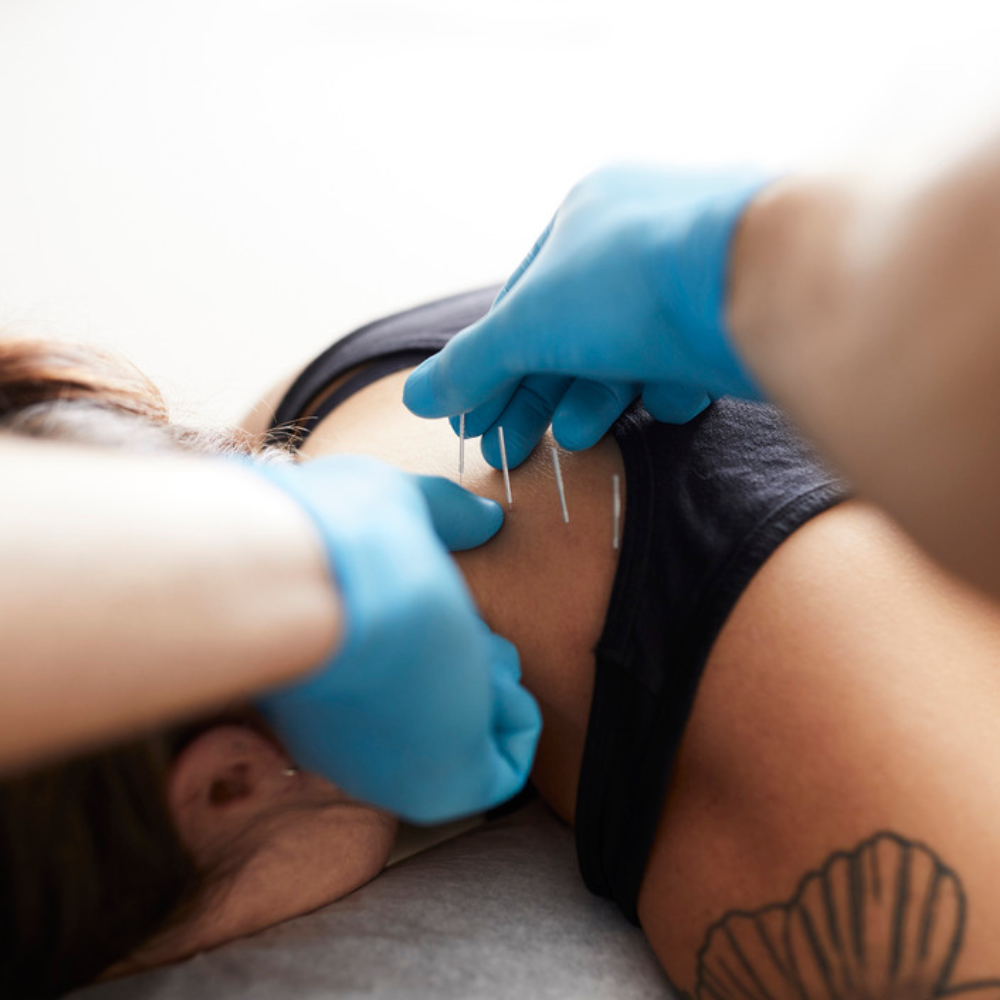
At TruMotion Therapy, shoulder pain treatment starts with calming things down before building them back up. Our first priority is reducing pain and irritation using palliative techniques such as dry needling, joint mobilization, laser therapy, and shockwave therapy when appropriate. Once pain is under control, we shift focus to identifying and correcting the root cause of the problem. That may include restoring mobility to restricted areas of the spine, improving flexibility in tight muscles around the shoulder, addressing weakness or poor motor control in the rotator cuff and scapular muscles, and correcting movement patterns that overload the joint. By combining hands-on care with targeted exercise and movement retraining, our goal is not just short-term relief, but long-term shoulder function and durability so you can get back to the activities you enjoy.
Shockwave Therapy for Shoulder Pain
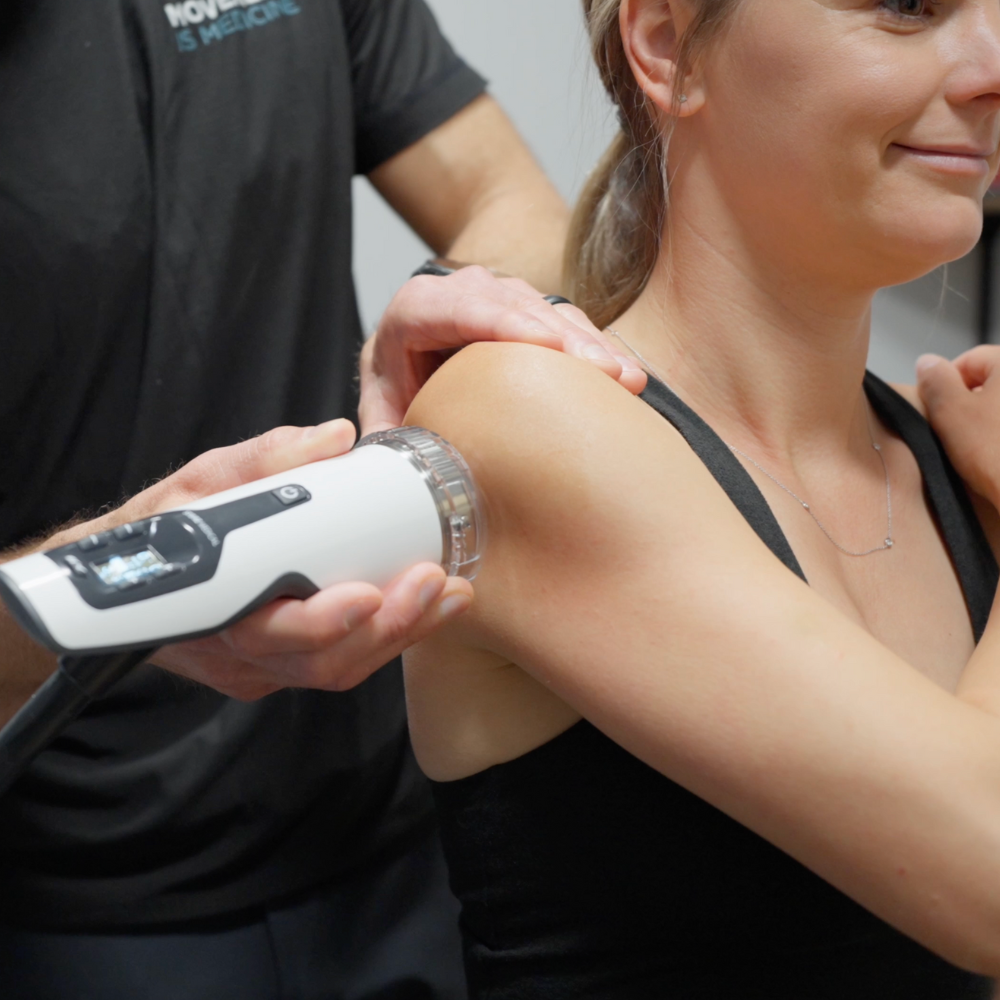
Shockwave therapy is an effective, non-invasive treatment for shoulder pain that helps stimulate the body’s natural healing process. By delivering targeted acoustic waves to injured tissue, shockwave therapy increases blood flow, breaks down scar tissue and calcifications, and promotes tendon and soft-tissue repair. It is commonly used for conditions like rotator cuff tendinopathy, calcific shoulder pain, and chronic bursitis, helping reduce pain, improve mobility, and restore strength without the need for injections or surgery. Many patients experience meaningful relief after just a few sessions and are able to return to normal activity faster than with rest alone.
Choose TruMotion Therapy for Shoulder Pain Care
You’ll find what you need from TruMotion Therapy. Our chiropractors take time to understand each patient’s unique situation and need to develop the ideal treatments to support their recovery from persistent shoulder pain.
Our skilled, highly experienced clinicians dedicate themselves to resolve pain and movement issues while prioritizing our patients’ well-being. Ready to live without shoulder pain or restricted movement? Turn to TruMotion Therapy in Charlotte, North Carolina — call (980) 819-5818 today for an appointment with our experts.


