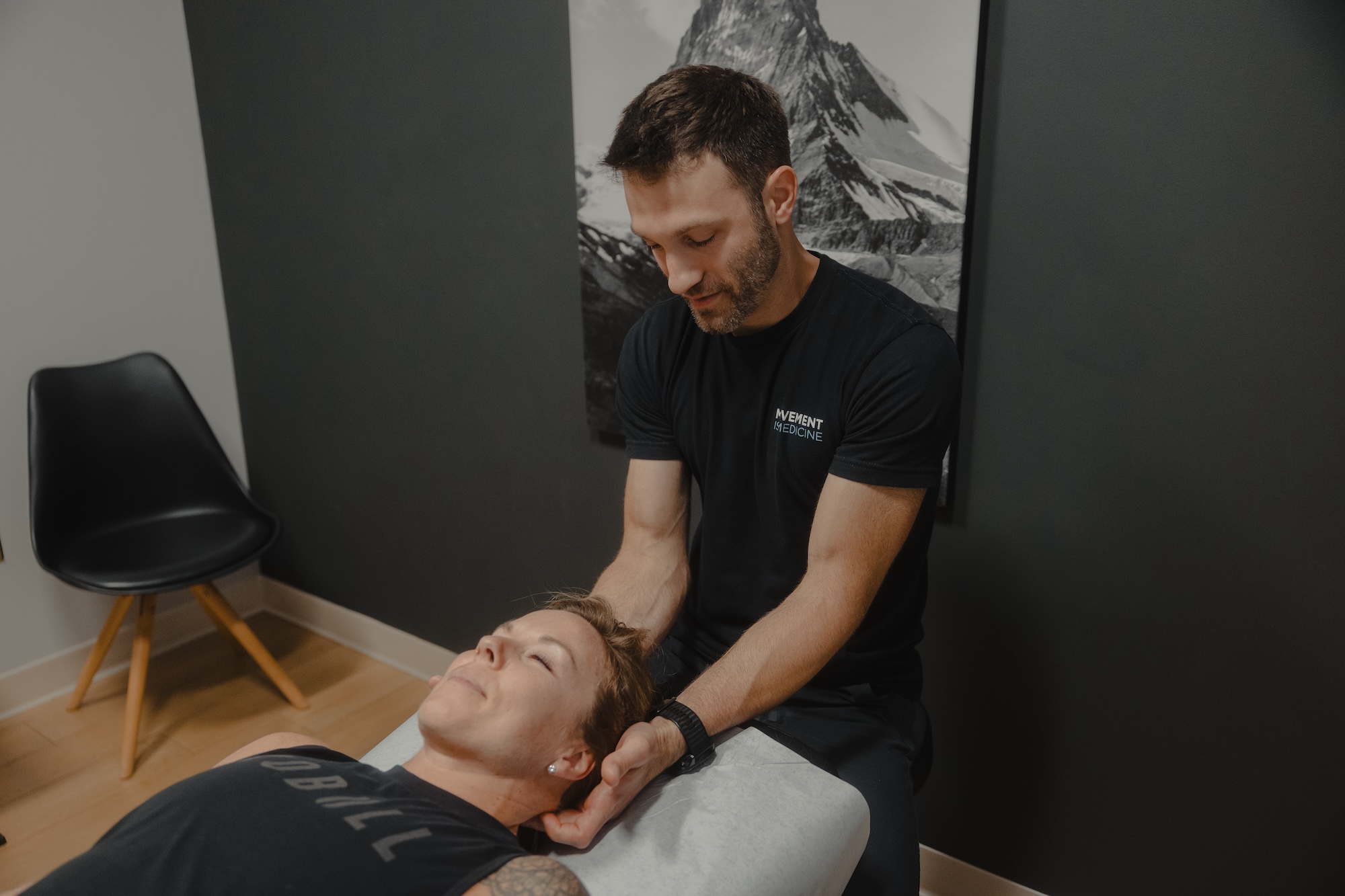
What We Treat: TMJ Syndrome
What is TMJ Syndrome?
Temporomandibular Disorder (TMD) is a term used to describe a group of problems that cause pain in the temporomandibular joint, also called the TMJ. These problems can arise from the muscles around the joint, the disc within the joint or the bony portion of the joint itself.
What Causes TMJ Syndrome?
Imbalances between the muscles that open and close your jaw are the most common culprit. Up to 25% of the population will suffer with TMD symptoms. Most patients are 20-50 years old and the condition is 2-3 times more common in females. Typical symptoms include: jaw clicking, limited mouth opening, possible jaw locking and pain. Chewing and eating usually make your symptoms more noticeable. TMD pain is generally described as an “ache” located in front of your ear canal but may also refer to other areas of your face, head, neck and shoulders. TMD patients often suffer from headaches.
TMD is more common in people who clench their jaw or grind their teeth, especially at night. Bad posture and emotional stress are contributors to this problem. You are three times more likely to suffer with TMD if you have been involved in a “whiplash” accident.
The neck is an often overlooked cause of jaw pain. When the muscles and joints in the neck are tight and not moving properly it will often refer pain to the jaw. Occasionally people can have jaw pain with nothing wrong with their jaw at all.

Common Symptoms
There can be a number of symptoms associated with TMJ syndrome that extend beyond pain in the jaw. If you are experiencing any of the following, you may have TMJ syndrome:
-
Jaw pain, tenderness, or clicking especially with chewing, talking, or yawning
-
Facial aching or pressure around the cheeks and temples
-
Frequent headaches or tension headaches
-
Ear-related symptoms like fullness, ringing, or ear pain without infection
-
Neck and upper shoulder tightness or soreness
-
Jaw locking or feeling like the bite is “off”
Our Approach to TMJ Syndrome and Jaw Pain
Many people in our local Charlotte community have found TMJ Syndrome and jaw pain relief through chiropractic, manual therapy, and corrective exercise here at TruMotion Therapy. Since each person is unique, an individual approach is taken with each patient. Listed below is our general approach at providing TMJ syndrome relief.
- Address the joints of the neck and jaw. Research has found chiropractic adjustments can help restore motion of tight joints in the neck and reduce the intensity of jaw pain.
- Loosen the muscles around the neck and jaw. We use techniques like massage, cupping, and dry needling and to reduce muscle tension. Laser Therapy is helpful at reducing pain and inflammation in the jaw joint.
- Corrective exercise that helps strengthen the muscles of the neck and reduce tension in the jaw has been shown to improve symptoms associated with TMJ syndrome.
- We will work together to address and reduce jaw pain triggers such as: poor posture, eating “rubbery” foods, gum chewing, sleep position, jaw clenching, and emotional stress.
Take Control of Your Jaw Pain
If you live in or around the Charlotte area and are experiencing TMJ Syndrome or any of the symptoms listed above, click below to work with our team and begin finding relief.
We pride ourselves in frequently having same day availability, minimal to no wait times, and treatment on the first visit.
End your struggle with jaw pain today!